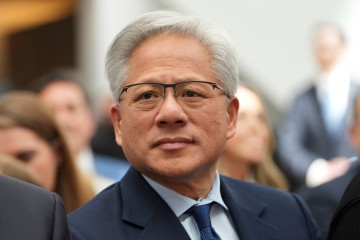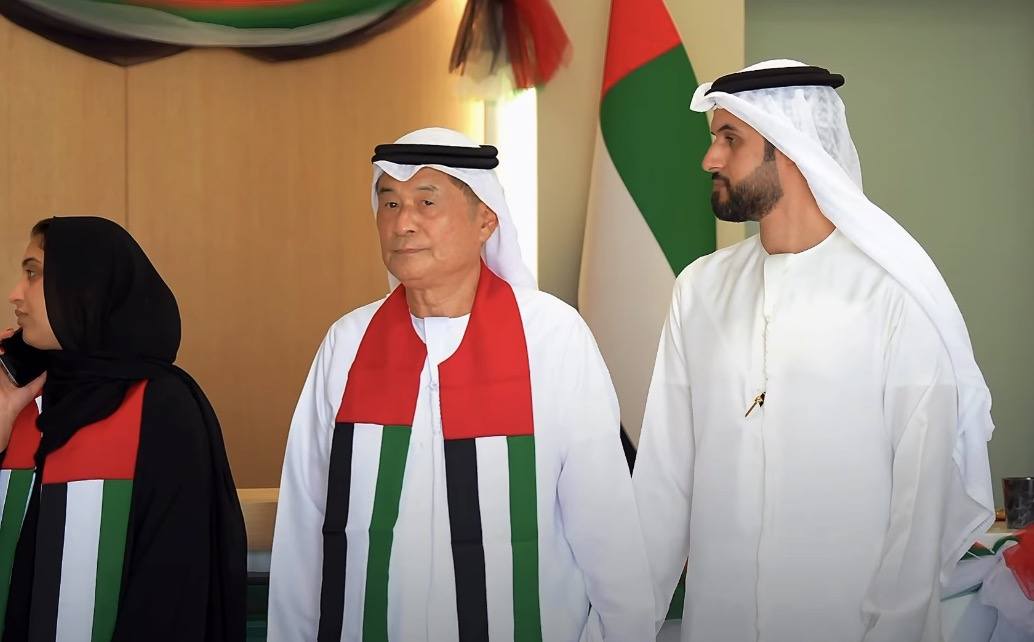
Hwang Woo-suk, a former Seoul National University professor who was dismissed over fabricated research, appears to have acquired United Arab Emirates citizenship and lost his South Korean citizenship, according to immigration officials.
A list of people who lost their South Korean citizenship, published by the Cheongju Immigration Office on Aug. 13, included a man named Hwang Woo-suk, born in 1953, who acquired Emirati citizenship on April 9.
The man's birthdate, registered domicile in Buyeo, South Chungcheong Province, and other personal details matched those of the former professor, who is currently conducting research in the UAE.
Under Article 15 of Korea's Nationality Act, South Korean nationals automatically lose their citizenship when voluntarily acquiring foreign citizenship.
Hwang is currently CEO of UAE Biotech, a research institute based in Abu Dhabi, where he leads research into animal cloning, stem cells and genome editing, with a focus on animal health and biodiversity.
The UAE revised its citizenship laws in 2021 to allow certain foreigners, including scientists, doctors and investors, to acquire citizenship through nominations by rulers, crown princes and government bodies.
Hwang is believed to have received Emirati citizenship through a recommendation from Sheikh Mansour bin Zayed Al Nahyan, the UAE's vice president and deputy prime minister, according to media reports.
Research scandal and fallout
Hwang was previously a professor of theriogenology and biotechnology at SNU, where he rose to international prominence for his work in animal cloning and stem cell research.
He gained worldwide attention after publishing two papers in the journal Science in 2004 and 2005, claiming to have successfully created human embryonic stem cells through cloning, including patient-specific stem cell lines.
The findings were initially hailed as breakthroughs that could pave the way for treatments for a range of diseases. However, questions soon emerged over the ethics of his research, particularly the sources of the human eggs used in his experiments.
In May 2004, the journal Nature raised concerns that eggs used in Hwang's research may have been obtained from junior members of his laboratory and paid donors. He initially denied the allegations but admitted in November 2005 that his research used eggs donated by junior researchers and paid donors.
In January 2006, an investigative committee at SNU concluded that both his 2004 and 2005 Science papers contained fabricated data, undermining his claims to have produced human embryonic stem cells through cloning.
SNU dismissed Hwang in 2006.
His research had received substantial financial support from the South Korean government. According to a February 2006 report by the Board of Audit and Inspection, government funding for his research totaled 18.6 billion won ($13.7 million), including 10.6 billion won in direct research funding, excluding spending on facilities such as new buildings. The funding was separate from private donations.
Hwang eventually faced criminal charges for embezzling research funds and violations of bioethics laws.
In October 2009, the Seoul Central District Court sentenced him to two years in prison, suspended for three years, after finding him guilty of embezzlement and violations of the Bioethics and Safety Act.
The sentence was subsequently reduced on appeal to 18 months in prison, suspended for two years, and was upheld by the Supreme Court in 2014.
In July, the government also revoked the Republic of Korea's Top Scientist and Engineer Award, which Hwang received in 2004, 22 years after the award was presented.
seungku99@heraldcorp.com